Drop the Screwdriver: Why SREs Need Power Tools, Not Replacements
Kyle Shelton
Read time:
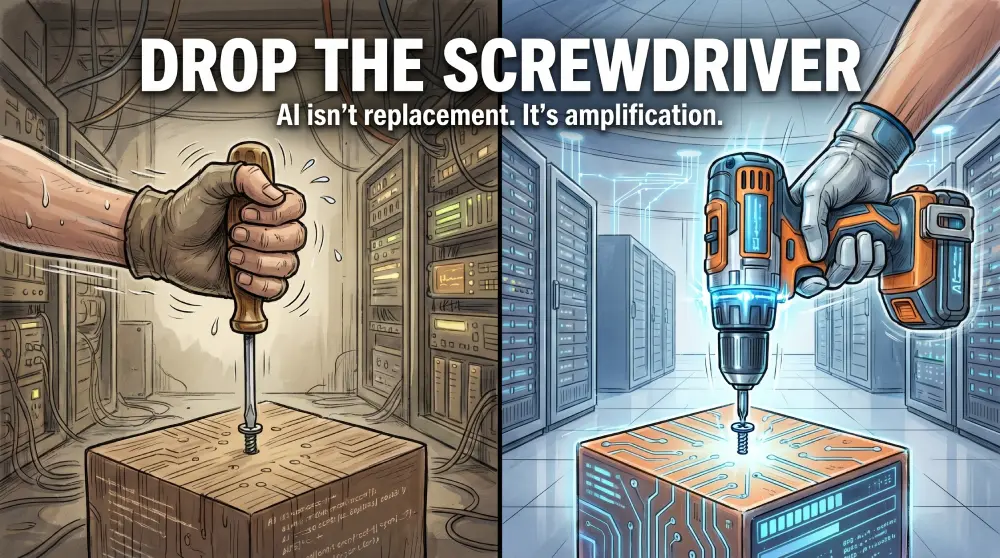
Howdy. Full disclosure: I am entirely useless with physical tools. If you hand me some wood and ask me to build a simple bookshelf, it’s going to end in tears, stripped screws, and a wobbly disaster. I am much, much better at smoking a brisket than framing a house.
But watch a master carpenter work. When someone hands them a high-end DeWalt power drill, they don’t panic. They don't look at the drill and think, "Well shoot, this piece of plastic is going to take my job." They think, "Hell yes, my wrist isn't going to ache tonight, and I can build this frame in half the time."
As an avid reliability practitioner myself, I truly believe that Site Reliability Engineers are the master builders of the digital world. Yet, for some reason, when we talk about AI in SRE, the narrative often shifts to replacement. The real conversation should be about SRE toil reduction: giving engineers better tools, not pink slips. And honestly? It’s driving me crazy.
The "Screwdriver" Era of Incident Response Management
Right now, the SRE industry is stuck using manual screwdrivers for incident response management. You know the drill (no pun intended). It’s 3 AM, the P1 alarm is blaring, and you’ve got the Incident Commander adrenaline spiking your heart rate. You’re grepping through endless logs, cross-referencing five different observability dashboards, and manually connecting the dots to figure out the root cause of what broke.
It works, just like a manual screwdriver works. But it takes a massive toll. The cognitive fatigue and stress of navigating those shadows during a major outage leads to brutal burnout. Site Reliability Engineering was literally invented to tackle SRE toil reduction, yet we are still relying on manual, repetitive diagnostic work when the systems we care about are on fire. It's a bad time contract for everyone involved.
The Spinach of Software Development
We all know that proper documentation and runbooks are the spinach of software development—necessary for a healthy system, but almost always skipped when we're hungry for shipping features. Because we skip the spinach, our systems become messy, undocumented, and held together by digital duct tape. Without a better approach to toil management in SRE, that complexity only compounds.
When vendors pitch AI SRE tools as a magical black box that will autonomously fix these messy outages, the boots on the ground rightfully roll their eyes. We have battle scars. We know that AI without operational context just hallucinates. Handing the keys over to an autonomous script during a critical failure is a one-way door we aren't willing to walk through. The problem isn't AI tools for SRE. It's AI without operational context.
Enter the Power Drill: The AI SRE Teammate
AI isn't here to replace the carpenter. It's the power drill that replaces the manual screwdriver.
When you give an expert an AI teammate, it's augmentation, not automation. The AI does the high-speed data parsing—spinning the drill—while the human provides the strategic direction and deep system knowledge—aiming the drill.
This isn't about removing humans from the loop; humans are the most important part of the system. It’s a blameless approach to getting systems back to a steady state faster and reducing MTTR. It empowers your engineers rather than insulting their intelligence.
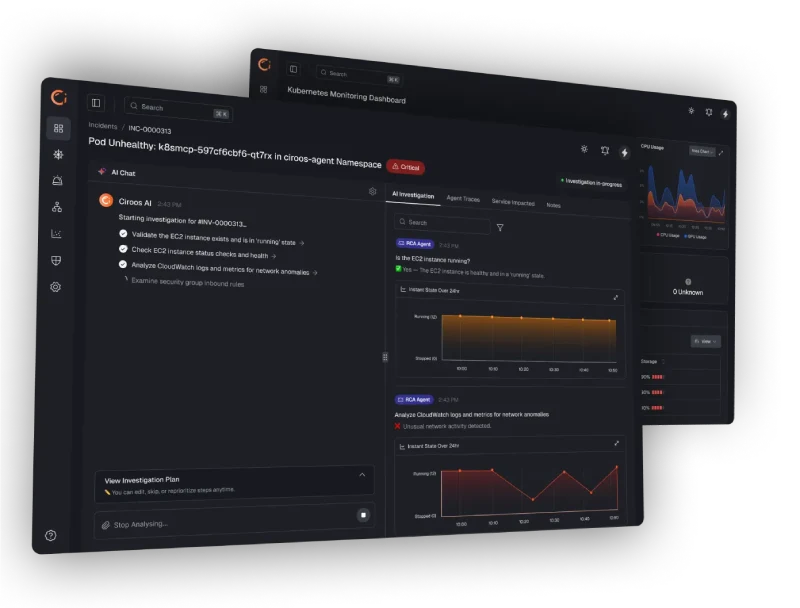
When you aren’t spending 40 hours a week manually turning screws to fight fires, you can finally focus on architecture, proactive reliability, and fostering an actual human-centric culture within your engineering team.
Meet your new AI SRE teammate. At Ciroos, we aren’t trying to replace your senior engineers. We’re building the ultimate AI SRE platform that acts as your AI SRE Teammate. We want to give your team the power tools they need to shift from reactive firefighting to proactive reliability engineering.
What Real SRE Toil Reduction Looks Like
Real SRE toil reduction is not about automating your way out of complexity. It is about giving engineers the context and confidence to act decisively when it matters most. That is the design principle behind an AI SRE platform built around human-trained intelligence: fewer false leads, fewer war rooms, and more capacity for the proactive reliability work your team was hired to do.
The goal is not a world without SREs. It is a world where SREs put down the manual screwdriver for good
Let's get to work.
Frequently Asked Questions About SRE Toil Reduction
What is SRE toil and why does it matter?
SRE toil refers to the repetitive, manual operational work that keeps systems running but does not make them more reliable over time. Alert triage, log grepping, cross-referencing dashboards during an incident. This is toil. It matters because it scales with system complexity, crowds out proactive reliability work, and burns out the engineers you most need to retain. Site Reliability Engineering was literally built around the goal of eliminating it.
How does SRE toil reduction actually reduce MTTR?
Most of the time lost during an incident is not in detection, but in investigation. Teams spend hours manually correlating signals across tools and domains before they can act with confidence. Effective SRE toil reduction eliminates that investigative lag, which is the primary driver of long MTTR. When engineers reach root cause faster, resolution follows.
Are AI tools for SRE actually ready for production environments?
It depends on the approach. Autonomous AI that acts without operational context is not ready, and most practitioners know it. But AI that augments engineers by handling investigative heavy lifting, reasoning across tools and domains, and compounding knowledge over time is a different proposition entirely. Here is a realistic look at where AI SRE actually stands in 2026.
What should I look for in an AI SRE solution?
The most important question to ask is whether the AI SRE software builds understanding or just surfaces signals. Tools that correlate alerts are useful but limited. What production teams actually need is a system that reasons across the full operational context; dependencies, configurations, change history, and human knowledge, in order to deliver root cause conclusions you can act on with confidence. See why so many AI SRE investments fail to deliver ROI.
Is proactive reliability actually achievable, or is reactive incident response just the reality?
Reactive incident response is not inevitable, it is a consequence of teams being too consumed by toil to invest in anything else. The path to proactive reliability runs directly through SRE toil reduction. When engineers are freed from manual investigation work, they can focus on the architecture, runbooks, and systemic improvements that prevent incidents in the first place. Learn why reactive SRE will always be expensive.
How do I evaluate AI for SRE the right way?
Start by defining what confidence in root cause actually looks like for your environment, then pressure-test any solution against your most complex, cross-domain failure scenarios, and not a sanitized demo. The right AI for SRE should work across your existing stack without requiring data centralization, and its accuracy should improve over time as it learns from your team. Download the 2026 AI SRE Buyer's Guide for a structured evaluation framework.
.png)